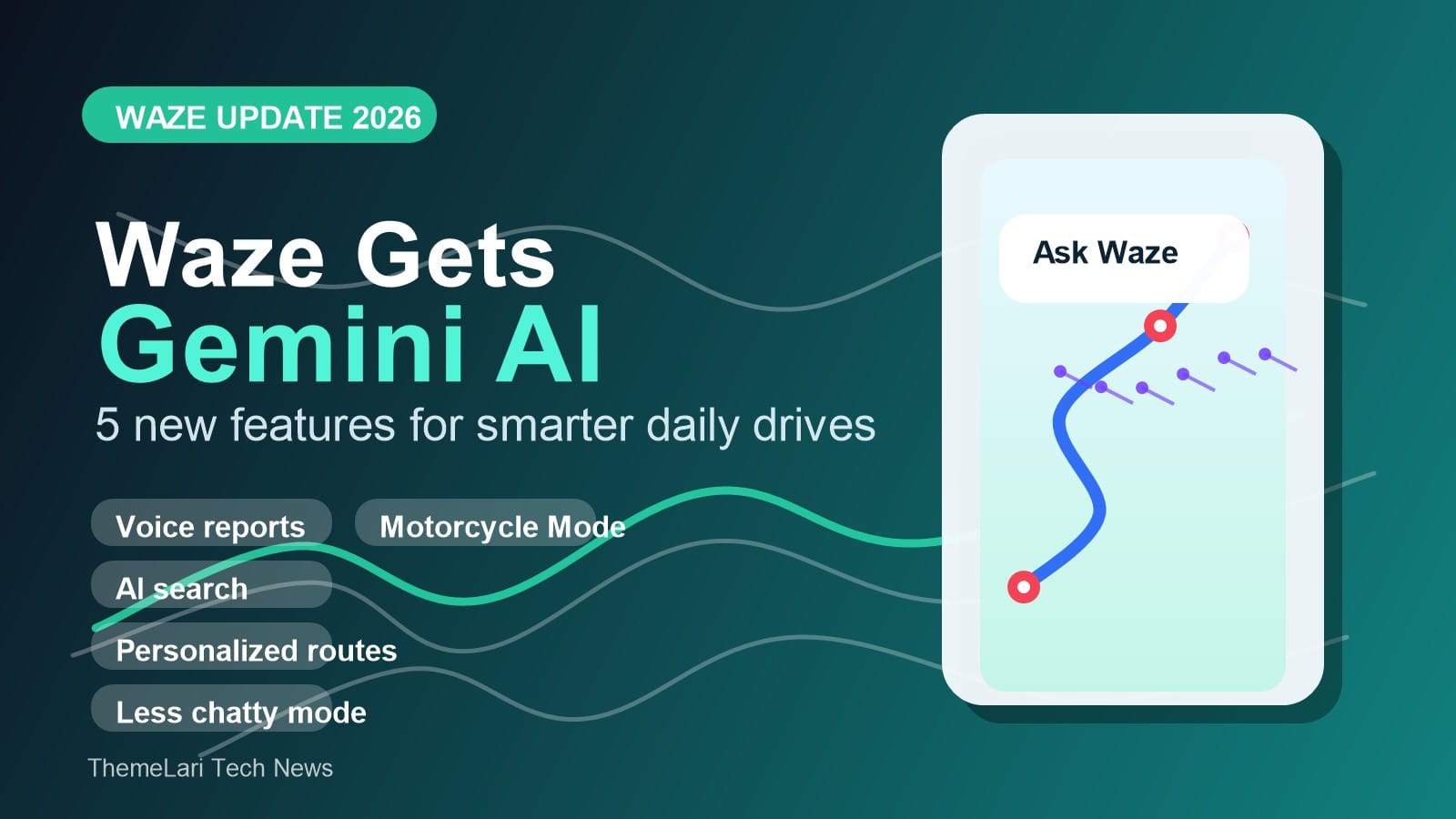
Waze adds Gemini AI to make navigation feel more natural
Waze is getting one of its biggest intelligence upgrades yet, and the timing matters. Drivers now expect navigation apps to do more than simply announce the next turn. They want real-time road alerts, smarter search, fewer distractions and routes that match how they actually drive. The latest Waze Gemini AI features are aimed at exactly that shift.
The Google-owned navigation app is adding Gemini-powered voice tools along with several personalization updates. Some features are rolling out globally, while others are beginning with beta users or selected countries. Together, they show how Waze is moving from a classic traffic app toward a more conversational driving assistant.
1. Natural voice reporting gets smarter
Waze has always depended on its community. Drivers report crashes, police presence, potholes, road closures and traffic jams, helping other users avoid delays. The new Gemini-powered conversational reporting system is designed to make that process easier.
Instead of tapping through menus or remembering exact commands, drivers can speak in a natural way. A user might say there is a lane blocked ahead, a road is closed, traffic has suddenly stopped or an address is wrong. Gemini helps Waze understand the meaning of the report and place it in the right category.
This matters because reporting while driving should be quick and low-friction. If the feature works well, it could reduce screen interaction and help Waze collect better road information from more users. Waze can also ask follow-up questions when extra detail is needed, which may improve the quality of community alerts.
2. Destination Search becomes conversational
One of the most practical Waze Gemini AI features is the new Destination Search experience. Drivers often know what they need, but not the exact name of the place. Instead of typing a business name, users can ask for a useful destination in plain language.
For example, a driver could ask for a coffee shop that is open now, a gas station with lower prices nearby, parking near a shopping center or a restaurant on the way home. Waze can then return options and help start navigation using voice.
This could be especially useful for commuters, tourists and people driving in unfamiliar neighborhoods. The feature is expected to reach Waze’s beta community first on Android and iOS before a wider rollout. That means many regular users may not see it immediately, but it is likely to become one of the most noticeable AI additions once it expands.
3. Personalized navigation learns driver habits
The fastest route is not always the route a person prefers. Some drivers like highways because they feel smoother and more predictable. Others avoid highways and choose local roads, even if the trip takes a little longer. Waze’s personalized navigation update is built around that reality.
The app can look at previous trips and local traffic patterns to surface routes that better match a driver’s habits. If someone regularly chooses highways over stop-and-go streets, Waze may show similar options more prominently. If a commuter prefers a familiar local route, the app can learn from that behavior too.
This is a useful change because navigation is personal. Two drivers leaving the same office at the same time may prefer completely different routes. Waze says users can still choose alternatives, and personalization can be turned off in settings.
4. Less-chatty guidance reduces interruptions
Voice guidance is helpful, but too many prompts can become irritating on long drives. Waze’s new “less chatty” mode is meant for drivers who want essential instructions without constant interruptions.
When enabled, the app shortens voice prompts and speaks less often. It still gives important navigation instructions and safety alerts, but it avoids repeating details when they are not needed. That should make Waze easier to use while listening to music, podcasts or audiobooks.
For daily commuters, this could be one of the most welcome changes. It does not radically change how navigation works, but it improves the feeling of using the app every day. A calmer voice experience can make a crowded city drive or a long highway trip feel less stressful.
5. Motorcycle Mode brings rider-focused routing
Waze is also adding Motorcycle Mode, a feature designed for riders rather than car drivers. Motorcycles can face different road risks, including slippery surfaces, potholes, speed bumps and narrow routes that may not matter as much to cars.
The new mode uses AI, traffic data and input from motorcycle-focused map editors to improve routes and estimated arrival times. It can also highlight hazards that are especially relevant to two-wheelers.
The first rollout is limited to Argentina, Brazil, Colombia, Malaysia, Mexico, Peru and the Philippines, with more countries planned later. That means riders in the United States, Europe and India may need to wait for confirmed availability.
What it means for drivers
The latest Waze update is not just about adding AI for the sake of it. The strongest part of the rollout is that each feature solves a normal driving problem. Reporting hazards should be easier. Searching for a destination should feel more natural. Routes should match real preferences. Voice prompts should interrupt less. Riders should receive guidance that reflects how motorcycles move through traffic.
There are still limits. AI can misunderstand requests, business information can change and drivers should always verify important details such as parking rules, fuel availability and road restrictions. Voice tools should support safer driving, not replace attention on the road.
Even with those cautions, the direction is clear. Waze is becoming more adaptive and more conversational. If the Waze Gemini AI features perform reliably as they roll out, the app could feel less like a fixed GPS tool and more like a smart travel companion that understands both the route and the driver.